Innovation Alphabet
3D Printing
in a nutshell
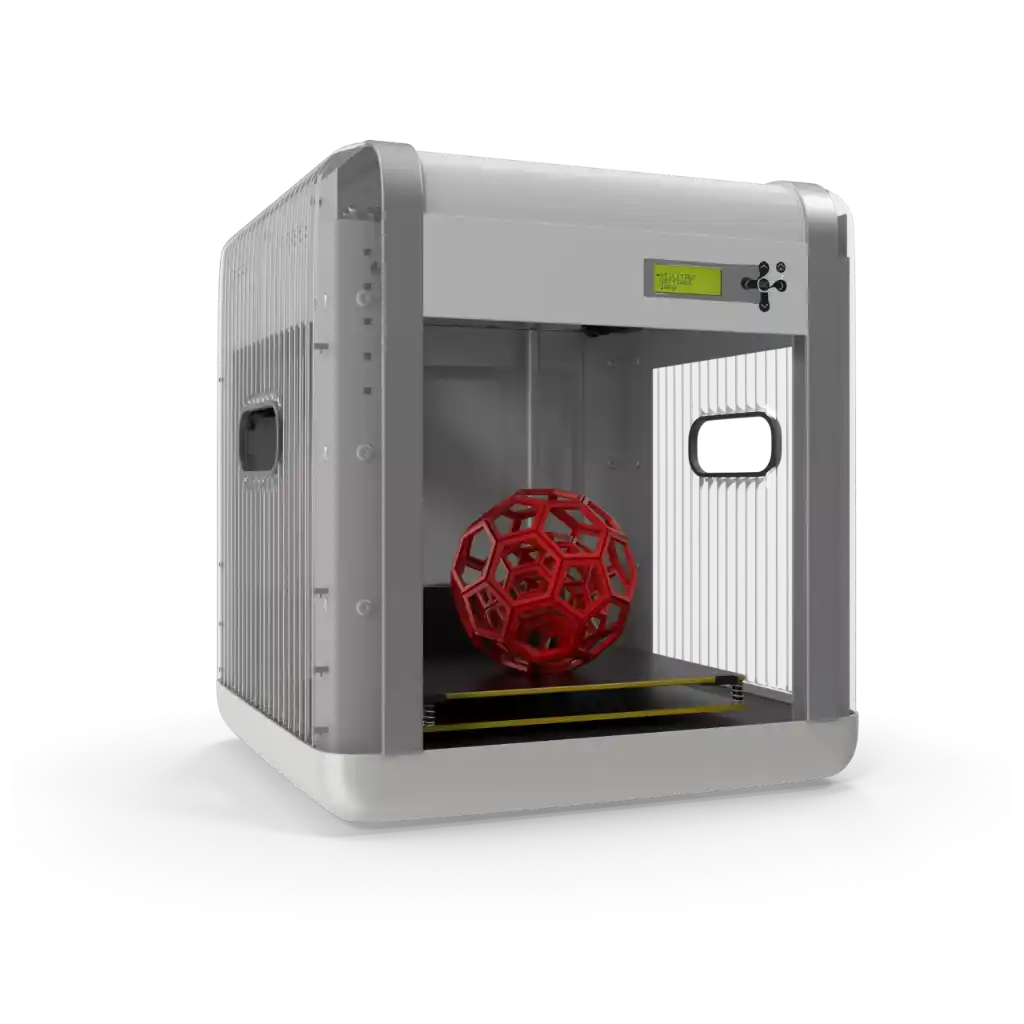
“3D printing” is a process carried out by an electronic device which, instead of resorting to the canonical ink, it molds almost any kind of material: from concrete to living tissue, most usually plastic, but recently even metal. And the operating principle is similar to that of a traditional printer. The creation of three-dimensional models can lead to the redesign of a company’s production capabilities.
Application fields
• Architecture: 3D printing has made it possible to transform complex drawings into realistic, meticulously detailed models, constituting a revolution in architectural design. Moreover, “additive manufacturing” aims to soon frequently concern large-scale construction of houses, bridges, infrastructures and so on. It promises to be a low-cost and environmentally friendly solution for modern construction.
• Medicine: In healthcare, 3D printing makes it possible to “touch” anatomical models of astonishing accuracy and analyze even the usually hidden internal parts such as tissues and blood vessels. In the future, the ability to print biological material in the laboratory will allow us to forge new, fully functioning organs, as well as customized prosthetics at incredibly affordable prices.
• Engineering products: The ultimate groundbreaking frontier in 3D printing is fusing metal in prototyping and production processes. Combining the design flexibility of 3D printing with the mechanical properties of metal alloys makes it possible to create lighter, fully functional prototypes and end-use components without material waste. In general, printing metal reduces the amount of moving components. Consequently, it reduces the possibility that a minor part failure invalidates the entire core element. But 3D printing isn’t just about canonical additive manufacturing. Laser cutting is a procedure that, starting from raw material, cuts it at high speed and with great accuracy until the final result is shaped.
Industries
• Architecture industry: 3D Housing 05
Massimo Locatelli of CLS Architetti designed the sustainable house, a 100-square-meter prototypical home built in just 7 days. The project represents an environmental challenge: a house that you can demolish and rebuild through recycling the same material. The dialogue between innovation and tradition made it possible to reduce waste and production costs.

• 3D Printing in the dental industry
After taking a three-dimensional image of a patient’s teeth, HP’s 3D technology makes thermoforms for customized dental aligners, shipped directly to the customer’s home. HP monitors progress via an app, through which the dentist can remotely check in. HP, then, recycles excess material and already processed plastic mouth molds into pellets for traditional injection molding.
• 3D Printing in the cosmetics industry
In 2018, cosmetics company Lush opened a research and development center in southern England equipped with additive manufacturing technologies. Stereolithography makes it possible to produce molds with fine details and lettering on products without any loss in quality. As a result, Lush can go from conception to printing in a matter of minutes, carving out time to be spent on increasingly sophisticated designs.


Do you have a Strategy & Innovation challenge to tackle? Let’s face it. Together.
C-levels from these companies (AND MORE) relied on my expertise to overcome thEIR CHALLENGES IN THIS AREA. And you can, too.
Can I help you?
business functions
• 3D Printing in support of housing construction
ICON has developed an industrial 3D printer capable of building a house in 12 to 24 hours, depending on size, at an average cost of just $10,000 and with good thermal efficiency. This is a challenge to traditional construction methods. Speed of realization, alternative design solutions and a high level of resilience.
• 3D Printing in support of footwear production
Crocs introduced “3NTR additive manufacturing” technologies into its production development process in order to maintain its high-quality standards while reducing costs and time-to-market. Using 3D printing, the company has optimized the prototyping phase and shortened lead times from 3 to 1.5 days.
• 3D Printing in support of car production
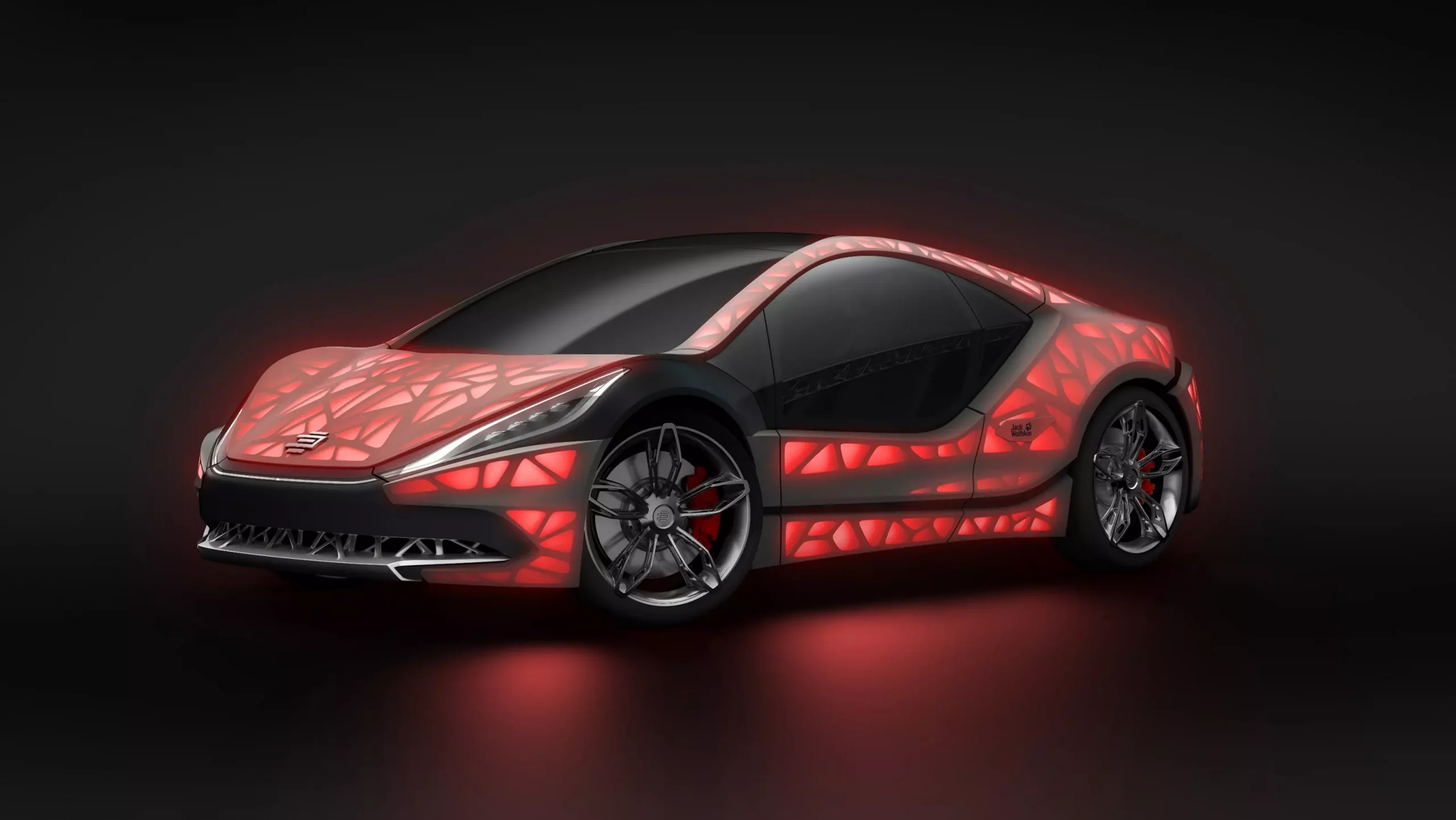
EDAG, a German design studio, has created Light Cocoon, a 3D printed car. The car is covered with a lightweight, transparent, and waterproof elastic material, which gives it a “bionic” design. The optimized structure was made using SLM 3D printing technology.
Stay in wonderland
Let me show you how deep the rabbit hole goes.
Check out more of the Innovation Alphabet:
Gamification
Gamification
Gamification is actually adding a game-like element to make more fun and engaging something that’s not necessarily a game. It’s all about turning a task that might be boring or difficult into a more enjoyable and motivating activity. You can also earn points, badges, and rewards for completing certain actions or challenges. Are you ready to play?
Dive In
Business Intelligence
Business Intelligence
A smart business means efficiency: Business Intelligence represents the ability to collect up-to-date data, present it in easy-to-understand formats, and deliver it in a timely manner to employees. Making data-driven decision-making and management processes leads to competitive advantage, reduces inefficiencies, and improves productivity and service at all levels.
Dive In
Artificial Scarcity
Artificial Scarcity
We often tend to desire what we cannot have. Or what we are in danger of losing: Artificial Scarcity is a strategy that flaunts a limited number of items that do not correspond to actual availability. The goal is to stimulate the perception in consumers that the stock of items is about to run out and thus create a need based on the “fear of being cut off” or the intention to buy the item in order to resell it at a higher price.
Dive In
Subscription Model
Subscription Model
A subscription model is a business tool that generates revenue by charging customers a fee at regular intervals. The company provides products or services to subscribers on a subscription basis, usually monthly or annually. In this way, loyalty has become more important than acquiring new users.
Dive In
Holacracy & Flat Organization
Holacracy & Flat Organization
A “flat organization” breaks down the traditional hierarchy and removes its negative connotation, while “holacracy” is the business tool that facilitates its formation. Flat organizations place more emphasis on communication and collaboration, aspiring to a distributed decision-making process that gives each employee a voice. But this is a model that is difficult to implement.
Dive In
Mass Customization
Mass Customization
Mass customization is an initiative adopted by companies to embrace the increasingly diversified needs of customers. By offering customizable products and services, consumers feel engaged and can bring their creativity into play. Brands gain from this a boost in perceived value and the opportunity to fuel a positive word-of-mouth marketing.
Dive In
Coopetition
Coopetition
If you can’t beat them, join them. Coopetition is a business strategy that defines cooperative and competitive relationships between competing companies in the same young or high-growth market. The goal is to travel a stretch of road together to lower initial research and development costs. Once the desired results are achieved, the companies will return to being enemies as before.
Dive In
MVP
MVP
To the disappointment of all sports fans, this is not an article about Michael Jordan. In the language of business, MVP stands for Minimum Viable Product and indicates the version of a new product that has enough features to attract customers. In this way, a team can gather the most feedback with the least effort, improve the prototype, and validate its sale.
Dive In
Agile
Agile
Agile is an approach to software development designed to respond to change. Teams quickly analyze the context in which they operate, identify uncertainties faced, and figure out how to adapt to always move forward. Interaction between individuals comes before processes and tools; collaboration with the customer is more important than negotiating contracts.
Dive In
Bounded Rationality
Bounded Rationality
The best solutions always come to mind when it is too late. This is because human beings tend to make decisions on the basis of satisfaction rather than optimization. Bounded Rationality means that we are unable to think clearly and linearly, we proceed by trial and error and forget all the possible variables that affect the process. But we are also flawed.
Dive In