Innovation alphabet
MVP (Minimum Viable Product)
in a nutshell
Sorry sports fans, this is not an article about Michael Jordan. In the language of business, MVP stands for Minimum Viable Product. It indicates the version of a new product that has enough features to attract customers. In this way, a team can gather the most feedback with the least effort, improve the prototype, and validate its sale.

Application Fields

• Vision: Since MVP is based on the basic iteration of a product or service to be launched in the market, it is necessary that the idea is accompanied by a well-directed business vision. However, the latter may be subject to change through validated customer insights and outcomes.
• Customer Relationship Management. Usually, first customers to test out new business ideas, so-called early adopters, tend to give more honest and sincere answers. These will form the basis for starting the real prototype development phase. In addition, once they have gained the trust of the users, they could directly turn into very important – and especially free – advocates for the dissemination of the innovative product.
• Flexibility: Having your product debut as a Minimum Viable Product can bring significant benefits. The research and development department, in particular, could see increased flexibility and responsiveness with a view to constant updating as optimized versions follow one another. The product will, thus, retain relevance and attractiveness on the market.
Industries
• MVP in the E-commerce industry
Amazon is currently the most successful online retailer, capable of generating traffic like few others. Yet, in the beginning it was nothing more than a platform dedicated solely to selling books. Gradually opening up to software, computers, and CDs, Amazon was able to test customer interest without the risk of spending time and money on a service with as yet unknown success. The rest is history.
• MVP in the marketplace for lodging
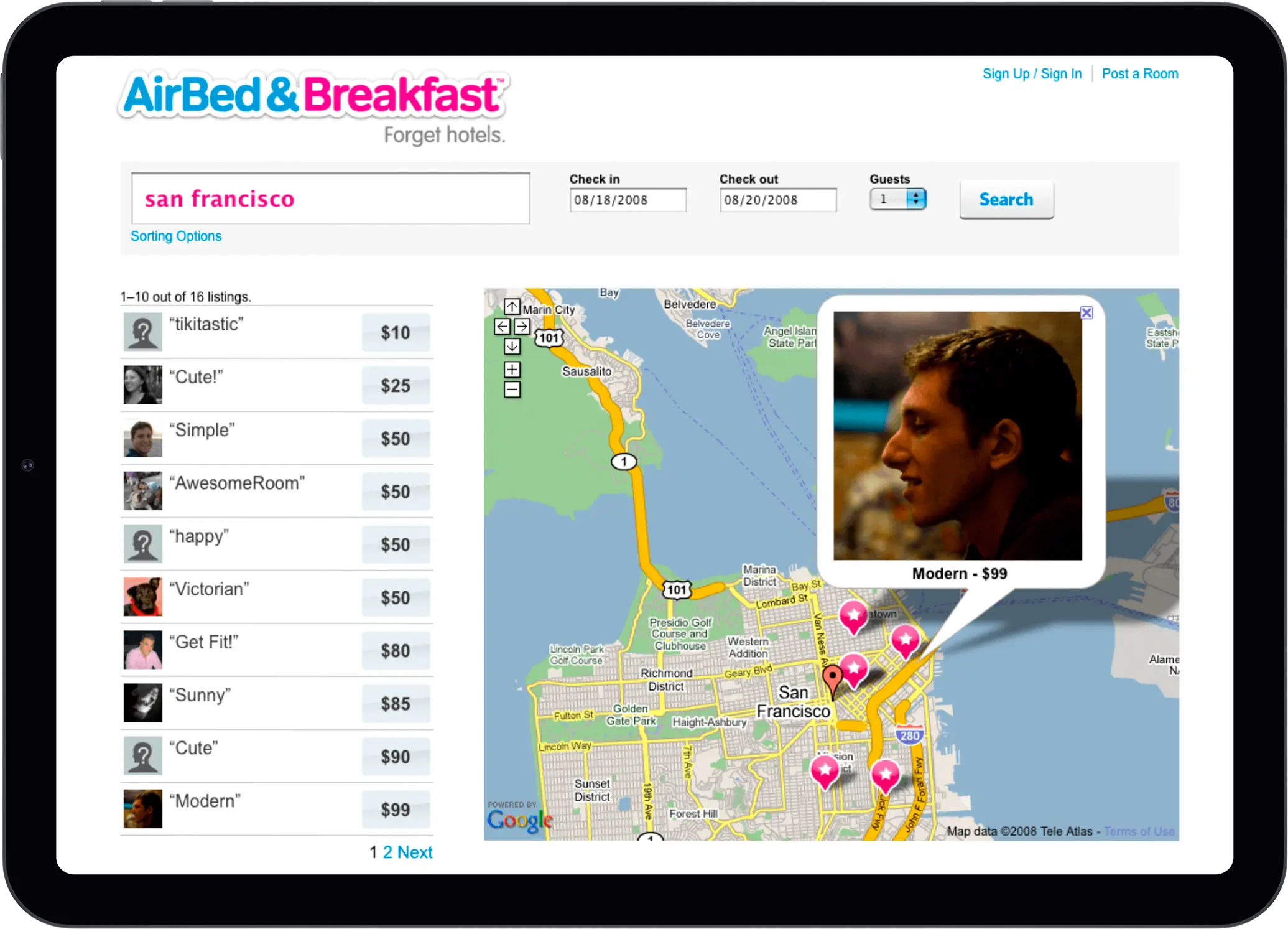
It all started with an industrial design conference in San Francisco in 2007. Airbnb’s founders, Brian Chesky and Joe Gebbia, made their first quiet appearance in the real estate rental industry after discovering that hotels in their area were sold out. So, they rented an air mattress (hence the company name) and built a website to start a potentially successful business. The following year, Denver hotels filled up for the Democratic National Convention. Thanks to Airbnb, 1,000 hosts began to accommodate attendees left without lodging.

• MVP in cloud storage
Dropbox is a widely used service that allows users to store their files in the cloud. Just before launching the project, its inventors provided nothing more than a trivial explanatory video of about 3 minutes describing how the digital archive (which had not yet been born) worked. But it was a well-thought-out video, full of jokes and humorous references. In fact, the idea turned out to be so clear and appealing to the most tech-savvy early adopters that it set off a chain reaction. Overnight, the waiting list went from 5,000 to 75,000 people.



Do you have a Strategy & Innovation challenge to tackle? Let’s face it. Together.
C-levels from these companies (AND MORE) relied on my expertise to overcome thEIR CHALLENGES IN THIS AREA. and You can, too.
Can I help you?

Business Functions
• MVP in support of communication
To facilitate communication among students on the Harvard campus, Mark Zuckerberg conceived the Facebook platform. The gradual increase in its popularity was inevitable. The social network in fieri was then adopted by three other American universities – Stanford, Columbia, and Yale. Expansion then covered other universities in other nations, eventually opening up to anyone 13 years or older with a valid e-mail address in 2006.
• MVP in support of sales
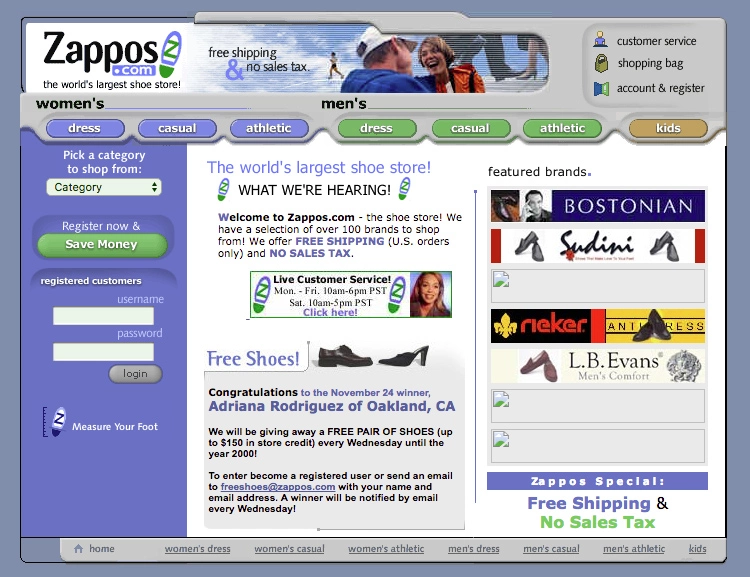
Zappos is an online clothing retailer, owned by the Amazon Group since 2009. Today it is absolutely normal to shop on the Internet, but in 1999, the year of its founding, it was not at all obvious. The original site was very basic and contained just a few photos of shoes taken by the founder himself in different shoe stores. The initial goal was not profit, but simply to test the idea and see if it would work.
• MVP in support of social media management
Buffer is now the platform that helps to organize personal social campaigns from a personal branding or company perspective, according to social media management schemes. It was born with a simple protected landing page on which potential interested users of the service were offered to leave their e-mail to receive updates. The goal was to see if there were customers willing to pay for a platform that would allow a series of tweets to be scheduled and queued at the same time. Starting with a few leads and leveraging their suggestions, Buffer achieved the desired success, and today it works with many other social networks as well.
Stay in wonderland
Let me show you how deep the rabbit hole goes.
Check out more of the Innovation Alphabet:

Gamification
Gamification
Gamification is actually adding a game-like element to make more fun and engaging something that’s not necessarily a game. It’s all about turning a task that might be boring or difficult into a more enjoyable and motivating activity. You can also earn points, badges, and rewards for completing certain actions or challenges. Are you ready to play?
Dive In
Business Intelligence
Business Intelligence
A smart business means efficiency: Business Intelligence represents the ability to collect up-to-date data, present it in easy-to-understand formats, and deliver it in a timely manner to employees. Making data-driven decision-making and management processes leads to competitive advantage, reduces inefficiencies, and improves productivity and service at all levels.
Dive In
Artificial Scarcity
Artificial Scarcity
We often tend to desire what we cannot have. Or what we are in danger of losing: Artificial Scarcity is a strategy that flaunts a limited number of items that do not correspond to actual availability. The goal is to stimulate the perception in consumers that the stock of items is about to run out and thus create a need based on the “fear of being cut off” or the intention to buy the item in order to resell it at a higher price.
Dive In
Subscription Model
Subscription Model
A subscription model is a business tool that generates revenue by charging customers a fee at regular intervals. The company provides products or services to subscribers on a subscription basis, usually monthly or annually. In this way, loyalty has become more important than acquiring new users.
Dive In
Holacracy & Flat Organization
Holacracy & Flat Organization
A “flat organization” breaks down the traditional hierarchy and removes its negative connotation, while “holacracy” is the business tool that facilitates its formation. Flat organizations place more emphasis on communication and collaboration, aspiring to a distributed decision-making process that gives each employee a voice. But this is a model that is difficult to implement.
Dive In
Mass Customization
Mass Customization
Mass customization is an initiative adopted by companies to embrace the increasingly diversified needs of customers. By offering customizable products and services, consumers feel engaged and can bring their creativity into play. Brands gain from this a boost in perceived value and the opportunity to fuel a positive word-of-mouth marketing.
Dive In
Coopetition
Coopetition
If you can’t beat them, join them. Coopetition is a business strategy that defines cooperative and competitive relationships between competing companies in the same young or high-growth market. The goal is to travel a stretch of road together to lower initial research and development costs. Once the desired results are achieved, the companies will return to being enemies as before.
Dive In
MVP
MVP
To the disappointment of all sports fans, this is not an article about Michael Jordan. In the language of business, MVP stands for Minimum Viable Product and indicates the version of a new product that has enough features to attract customers. In this way, a team can gather the most feedback with the least effort, improve the prototype, and validate its sale.
Dive In
Agile
Agile
Agile is an approach to software development designed to respond to change. Teams quickly analyze the context in which they operate, identify uncertainties faced, and figure out how to adapt to always move forward. Interaction between individuals comes before processes and tools; collaboration with the customer is more important than negotiating contracts.
Dive In
Bounded Rationality
Bounded Rationality
The best solutions always come to mind when it is too late. This is because human beings tend to make decisions on the basis of satisfaction rather than optimization. Bounded Rationality means that we are unable to think clearly and linearly, we proceed by trial and error and forget all the possible variables that affect the process. But we are also flawed.
Dive In