Innovation Alphabet
Industry 4.0
In a nutshell
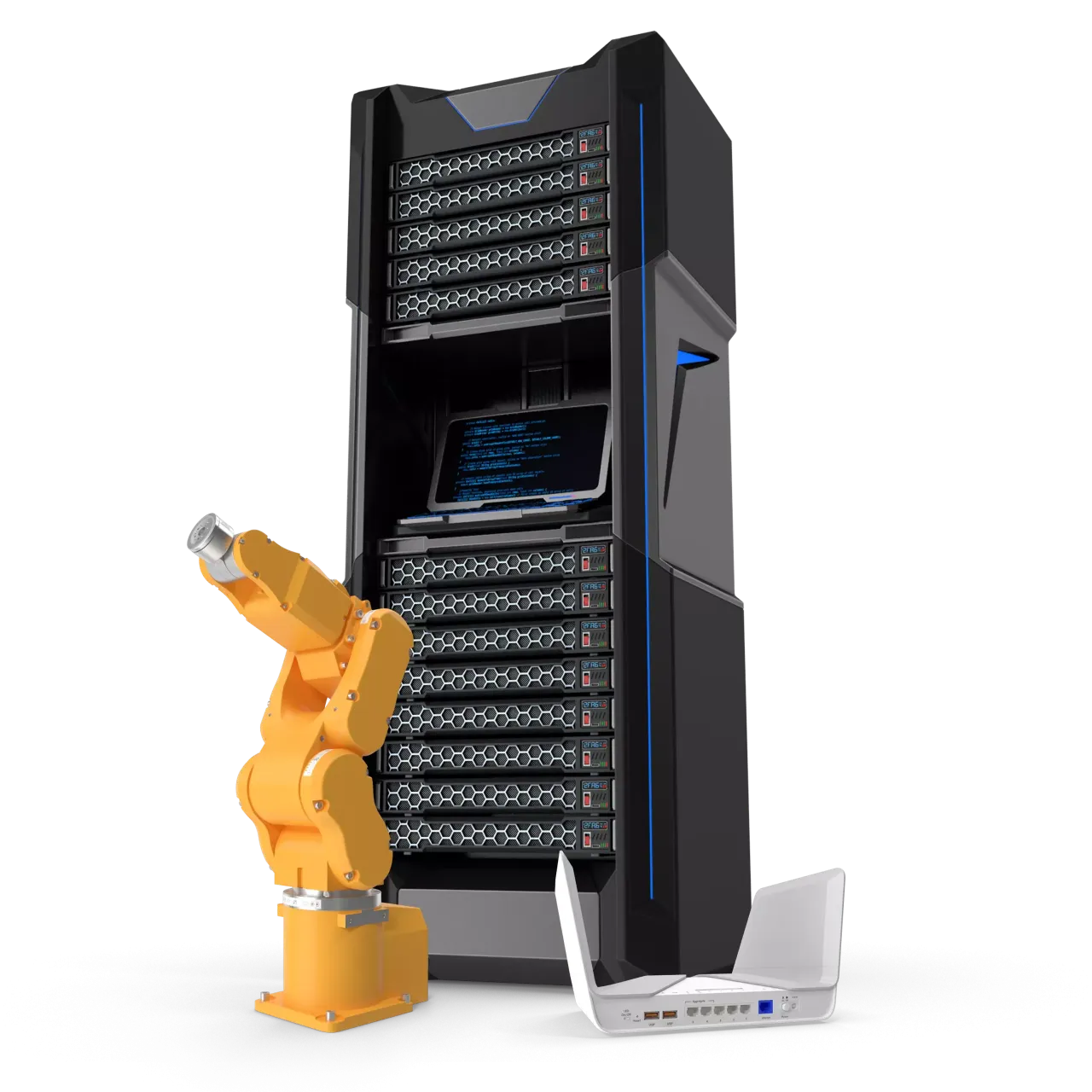
Charlie Chaplin’s “Modern Times” has never been far away. The real modernity is Industry 4.0: the result of the fourth industrial revolution, which has transformed supply chain automation, monitoring, and analysis processes through smart technology. Smart factories arise in response to a need for growth and innovation; they are networked, data-driven, and AI-based.
Application Fields
• Industry: Industry 4.0 surrounds itself with interconnected machines that talk to each other to perform self-diagnostics and predictive maintenance. Thanks to IIoT (Industrial Internet of Things), factories can autonomously predict the risk of production failure, take the best preventive measures and self-repair. The smart factory enables customization of production according to the customer, quickly designs and modifies products. And also avoids downtime. Robots work in contact with humans and learn from them. the workflow can be reproduced and analyzed virtually, so as to verify its operation and enhance its performance.

• Automotive Industry: The fourth industrial revolution has also landed in the world of automotive dealerships. And it is offering benefits such as excellence in data and information management, collaborative capability of the sales organization, and product lifecycle innovation with a view to the circular economy.
• Food Industry: One of the areas of the food sector particularly involved in the smart revolution concerns the recall of batches that are damaged or subject to consumer complaints. Industry 4.0 can support the food sector in the new habits of consumers. Nowadays, they are very concerned about product quality. In this regard, smart labeling – a combination of wireless technology, software applications and cloud platforms – enables consumers to verify the authenticity of the product by scanning its label and obtaining evaluations, reviews, videos and other loyalty opportunities.



Do you have a Strategy & Innovation challenge to tackle? Let’s face it. Together.
C-levels from these companies (AND MORE) relied on my expertise to overcome thEIR CHALLENGES IN THIS AREA. And You can, too.
Can I help you?
Industries
• Industry 4.0 in the production industry
PMS 4.0 is an application that guides every routine operation by transferring all control and reaction activities into a shared digital environment. It is accessible by operators via tablets and smartphones located in production departments. PMS is designed to control and manage repetitive issues such as shift succession, observance of HSE safety standards, workstation compliance, time and mode, and man-machine alignment.
• Industry 4.0 in the automotive industry
World Class Manufacturing (WCM) is a structured and integrated production methodology adopted in FCA plants around the world. It involves the entire organization: safety, environment, maintenance, logistics and quality. The main objective of WCM is the continuous improvement in all areas of production in order to ensure the quality of the final product and meet customer expectations. Projects developed under the WCM method – based on a high level of employee engagement – aim to eliminate all forms of waste and loss until zero accidents, zero waste, zero breakdowns, and zero inventory are achieved.

• Industry 4.0 in the mechanical industry
The F.lli Carminati mechanical workshop decided to become part of Industry 4.0 by trying to interconnect the broaching loading robot with the company’s management system and MES (Manufacturing Execution System). The aim was to automate data collection, track downtime and know the cost related to each job order. To meet this need, the company relied on iDaq software (typical of smart factories), which is used to communicate directly with the robot and collect key production and process data, such as the status of the robot or the number of parts produced.
Business Functions
• Industry 4.0 in support of customer experience
The LVMH (Louis Vuitton Moët Hennessy) group has signed a partnership with Google Cloud. Why? To create a personalized customer experience by accelerating innovation and developing cloud-based Artificial Intelligence solutions. The new AI and machine learning technologies improve business operations because they contribute to demand forecasting and warehouse logistics. They also enrich the customer experience with personalized services tailored to the customer.
• Industry 4.0 in support of internal process transformation
The Solari company in Udine opted for a 360-degree IT conversion involving products and internal work processes. Those were made more efficient through the use of technology. Product Lifecycle Management (PLM), for example, is a software that fully manages the lifecycle of a product, from its creation to its disposal.
Stay in wonderland
Let me show you how deep the rabbit hole goes.
Check out more of the Innovation Alphabet:

Gamification
Gamification
Gamification is actually adding a game-like element to make more fun and engaging something that’s not necessarily a game. It’s all about turning a task that might be boring or difficult into a more enjoyable and motivating activity. You can also earn points, badges, and rewards for completing certain actions or challenges. Are you ready to play?
Dive In
Business Intelligence
Business Intelligence
A smart business means efficiency: Business Intelligence represents the ability to collect up-to-date data, present it in easy-to-understand formats, and deliver it in a timely manner to employees. Making data-driven decision-making and management processes leads to competitive advantage, reduces inefficiencies, and improves productivity and service at all levels.
Dive In
Artificial Scarcity
Artificial Scarcity
We often tend to desire what we cannot have. Or what we are in danger of losing: Artificial Scarcity is a strategy that flaunts a limited number of items that do not correspond to actual availability. The goal is to stimulate the perception in consumers that the stock of items is about to run out and thus create a need based on the “fear of being cut off” or the intention to buy the item in order to resell it at a higher price.
Dive In
Subscription Model
Subscription Model
A subscription model is a business tool that generates revenue by charging customers a fee at regular intervals. The company provides products or services to subscribers on a subscription basis, usually monthly or annually. In this way, loyalty has become more important than acquiring new users.
Dive In
Holacracy & Flat Organization
Holacracy & Flat Organization
A “flat organization” breaks down the traditional hierarchy and removes its negative connotation, while “holacracy” is the business tool that facilitates its formation. Flat organizations place more emphasis on communication and collaboration, aspiring to a distributed decision-making process that gives each employee a voice. But this is a model that is difficult to implement.
Dive In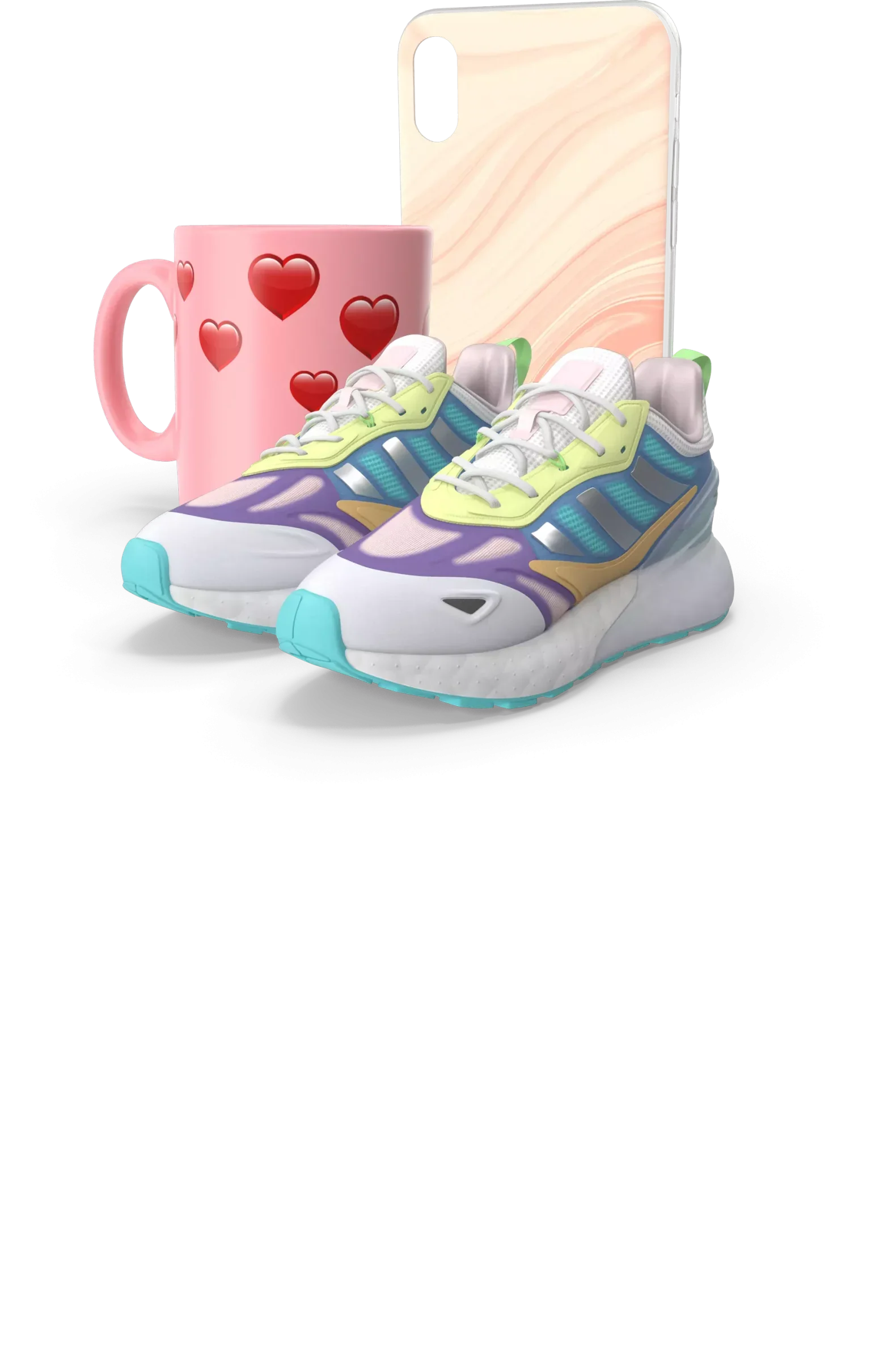
Mass Customization
Mass Customization
Mass customization is an initiative adopted by companies to embrace the increasingly diversified needs of customers. By offering customizable products and services, consumers feel engaged and can bring their creativity into play. Brands gain from this a boost in perceived value and the opportunity to fuel a positive word-of-mouth marketing.
Dive In
Coopetition
Coopetition
If you can’t beat them, join them. Coopetition is a business strategy that defines cooperative and competitive relationships between competing companies in the same young or high-growth market. The goal is to travel a stretch of road together to lower initial research and development costs. Once the desired results are achieved, the companies will return to being enemies as before.
Dive In
MVP
MVP
To the disappointment of all sports fans, this is not an article about Michael Jordan. In the language of business, MVP stands for Minimum Viable Product and indicates the version of a new product that has enough features to attract customers. In this way, a team can gather the most feedback with the least effort, improve the prototype, and validate its sale.
Dive In
Agile
Agile
Agile is an approach to software development designed to respond to change. Teams quickly analyze the context in which they operate, identify uncertainties faced, and figure out how to adapt to always move forward. Interaction between individuals comes before processes and tools; collaboration with the customer is more important than negotiating contracts.
Dive In
Bounded Rationality
Bounded Rationality
The best solutions always come to mind when it is too late. This is because human beings tend to make decisions on the basis of satisfaction rather than optimization. Bounded Rationality means that we are unable to think clearly and linearly, we proceed by trial and error and forget all the possible variables that affect the process. But we are also flawed.
Dive In