Innovation Alphabet
Smart Contract
In a nutshell
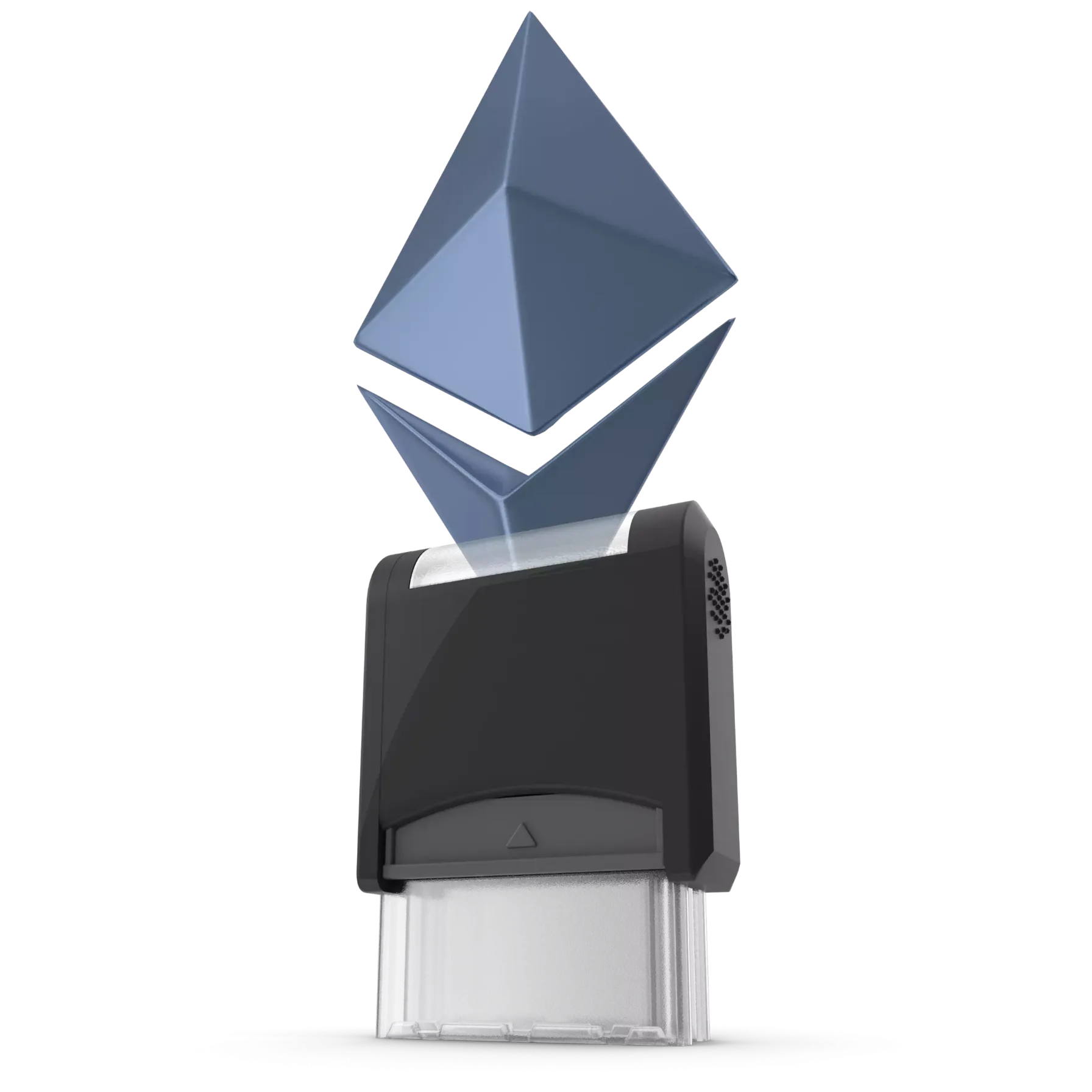
If-this-then-that: this is the logic on which smart contracts – a technological application that operates on the blockchain system to automate the performance of contractual services – are based. A series of clauses are translated into code inside a software, so as to bind the parties to comply with the contract. Independence, unmodifiability, cost savings.
Application Fields
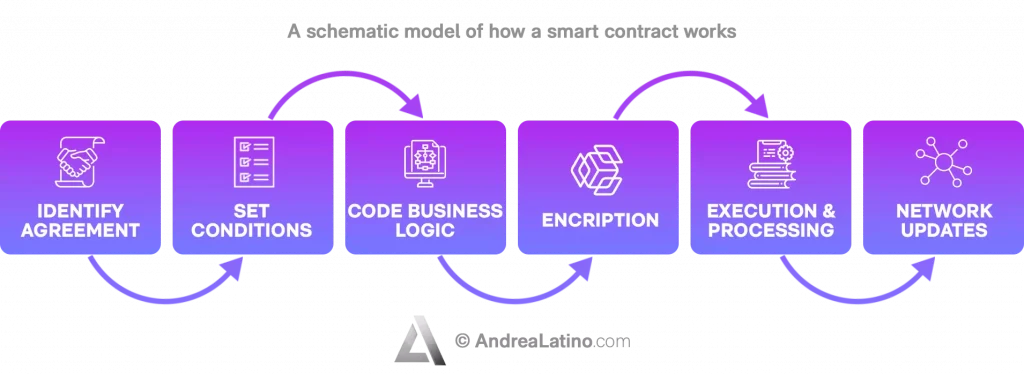
• Insurance Sector: A smart contract is based on a code that “reads” the contractual clauses and operating modes in which the agreed conditions must occur. The contract is automatically executed when the data referring to the actual situations correspond to the data referring to the conditions and clauses reported. The smart contract, consequently, is independent from intermediaries (notaries and lawyers) during the verification and approval stage, although legal support is still necessary for its drafting.
• Banking industry: Contract automation is a huge advantage for the banking field, as it avoids the use of intermediaries, drastically reducing transactional costs. Banking services lend themselves particularly well to being digitalized and automated in an integrated and decentralized digital environment such as blockchain technology.
• Sharing economy: When making online purchases, payment is transferred only if the product has been successfully delivered. Sharing economy services could benefit a lot from smart contracts because they would ensure security and compliance.
Industries
• Smart contract in the financial industry
Ethereum has become the blockchain of reference for the creation of smart contracts (more than 200,000 “signed” as of today). Ether is the virtual currency unit, serving both as a cryptocurrency and a power generator. Smart contracts, in order to function, must pay for the use of the network’s computing power through the related digital currency. Contracts can cover financial transactions but also domain registration, election systems, crowdfunding and more.
• Smart contract in the digital industry
Blockchain Technology Partners is an organization that aims to reduce transaction costs and complexity through decentralization while ensuring trust, transparency, and accountability.
• Smart contract in the IT industry
Digital Asset is an American startup that focuses on DAML, an intuitive programming language for smart contracts. It digitalizes agreements between parties and safely automate transactions. Digital Asset enables large companies to leverage the power of Distributed Ledger Technology to streamline business operations and make value transfers efficient and secure.


Do you have a Public Affairs & Comms challenge to tackle? Let’s face it. Together.
C-levels from these companies (AND MORE) relied on my expertise to overcome thEIR CHALLENGES IN THIS AREA. And You can, too.
Can I help you?
Business Functions
• Smart contract in support of supply chain management
Covantis has implemented blockchain solutions to efficiently execute trade operations and document management. Stakeholders will exchange documents and information more quickly. The technology has improved by 60 percent in automated tasks, 70 percent in transaction speed, and 80 percent in error reduction.
• Smart contract in support of insurance
Stratumn is a French startup that, after winning over BNP Paribas Cardif’s C. Entrepreneurs fund as well, is trying to implement the largest trial of blockchain network for insurance involving 14 companies. Stratumn’s technology promises to redesign end-to-end process management and aims to address privacy compliance issues through its advanced encryption system.
• Smart contract in support of trade exchanges
Japanese insurance company Tokio Marine & Fire Insurance Nichido, in collaboration with NTT Data Corporation, has begun experimenting the use of blockchain for policies in the commercial trade sector, especially maritime trade.
Stay in wonderland
Let me show you how deep the rabbit hole goes.
Check out more of the Innovation Alphabet:

Gamification
Gamification
Gamification is actually adding a game-like element to make more fun and engaging something that’s not necessarily a game. It’s all about turning a task that might be boring or difficult into a more enjoyable and motivating activity. You can also earn points, badges, and rewards for completing certain actions or challenges. Are you ready to play?
Dive In
Business Intelligence
Business Intelligence
A smart business means efficiency: Business Intelligence represents the ability to collect up-to-date data, present it in easy-to-understand formats, and deliver it in a timely manner to employees. Making data-driven decision-making and management processes leads to competitive advantage, reduces inefficiencies, and improves productivity and service at all levels.
Dive In
Artificial Scarcity
Artificial Scarcity
We often tend to desire what we cannot have. Or what we are in danger of losing: Artificial Scarcity is a strategy that flaunts a limited number of items that do not correspond to actual availability. The goal is to stimulate the perception in consumers that the stock of items is about to run out and thus create a need based on the “fear of being cut off” or the intention to buy the item in order to resell it at a higher price.
Dive In
Subscription Model
Subscription Model
A subscription model is a business tool that generates revenue by charging customers a fee at regular intervals. The company provides products or services to subscribers on a subscription basis, usually monthly or annually. In this way, loyalty has become more important than acquiring new users.
Dive In
Holacracy & Flat Organization
Holacracy & Flat Organization
A “flat organization” breaks down the traditional hierarchy and removes its negative connotation, while “holacracy” is the business tool that facilitates its formation. Flat organizations place more emphasis on communication and collaboration, aspiring to a distributed decision-making process that gives each employee a voice. But this is a model that is difficult to implement.
Dive In
Mass Customization
Mass Customization
Mass customization is an initiative adopted by companies to embrace the increasingly diversified needs of customers. By offering customizable products and services, consumers feel engaged and can bring their creativity into play. Brands gain from this a boost in perceived value and the opportunity to fuel a positive word-of-mouth marketing.
Dive In
Coopetition
Coopetition
If you can’t beat them, join them. Coopetition is a business strategy that defines cooperative and competitive relationships between competing companies in the same young or high-growth market. The goal is to travel a stretch of road together to lower initial research and development costs. Once the desired results are achieved, the companies will return to being enemies as before.
Dive In
MVP
MVP
To the disappointment of all sports fans, this is not an article about Michael Jordan. In the language of business, MVP stands for Minimum Viable Product and indicates the version of a new product that has enough features to attract customers. In this way, a team can gather the most feedback with the least effort, improve the prototype, and validate its sale.
Dive In
Agile
Agile
Agile is an approach to software development designed to respond to change. Teams quickly analyze the context in which they operate, identify uncertainties faced, and figure out how to adapt to always move forward. Interaction between individuals comes before processes and tools; collaboration with the customer is more important than negotiating contracts.
Dive In
Bounded Rationality
Bounded Rationality
The best solutions always come to mind when it is too late. This is because human beings tend to make decisions on the basis of satisfaction rather than optimization. Bounded Rationality means that we are unable to think clearly and linearly, we proceed by trial and error and forget all the possible variables that affect the process. But we are also flawed.
Dive In