Zero-Based Redesign
Innovation Alphabet
Zero-Based Redesign
In a nutshell
The Zero-Based Redesign approach refers to a restructuring that helps companies increase the likelihood of long-term success and prepares them for unexpected disruptions in the business. An evolved, no-frills, practical new operational asset. It prioritizes agility and vision for the future, transforms corporate culture by aligning internal priorities, and radically reforms the cost structure.

DEFINITION
A different interpretation of “starting over”
Usually, traditional efforts to streamline and simplify settle for incremental changes to the status quo. Savings tend to be temporary as costs come flooding back. Zero-Based Redesign, on the other hand, is a one-time effort that sets a brave ambition defined by core activities in delivering what customers value most about you. Organizational structure, governance, responsibilities and processes are integrated in order to satisfy your customers’ needs and optimize the efficiency of your front line, using the best existing technology.
The ZBR approach puts a company in the position of having to virtually rebuild a process from scratch, without considering any type of limitation from the standpoint of resources, budget, and skills. By doing so, reorganization managers think outside the box and try to redesign their enterprise according to a strategic optimum consisting of activities required to support function-level strategy. This step involves reinstating activities, for example, investments in company culture, that are deemed critical to pursuing business objectives.

Application Fields
• Strategy: The Zero-Based approach assists the execution of the company’s business plan by building a strategy capable of guiding day-to-day actions so that long-term goals are accomplished. As a result, it is essential to wipe the slate clean, eliminating all activities that are not necessary for optimizing the company and then starting new ones based on the goals set. For example, if the company sets digitalization as a goal, it will be necessary to support daily operations with investments to create a digital culture among employees.
• Transparency: Zero-Based Redesign enables transparency of operations inside an organization, as it adopts an end-to-end perspective on both internal and external costs. Companies can leverage traceability to redesign business processes, seizing the opportunity to automate workflows and thereby reduce costs.
• Calculated Revolution: Before adopting a Zero-Based approach and redesigning from scratch, it is important to understand the potential response of the organization. Only after that it would be possible to initiate a change management plan. Senior managers must verify that the new organizational structure can function properly and is capable of supporting future operations. Once the appropriate tests have been conducted, managers will be responsible for training and informing employees about the benefits of the new course.
Industries
• Zero-Based Redesign in the pharmaceutical industry
Pharmaceutical industries are usually cautious about integrating innovation within their business models. Yet a Zero-Based reorganization could bring a breath of fresh air to the industry, giving it an important and bold constructive change. In particular, it would enable:
– Choosing the right digital technologies and prioritizing tools that can automate and improve processes.
– Assessing the fit of technologies to determine the most profitable ones.
– Building prototypes to conduct testing and learning experiments, and then testing whether or not a particular solution is a good fit for the business.
• Zero-Based Redesign in the service industry
Delta Airlines, one of the largest U.S. airlines, revolutionized its structure by restarting from scratch to deal with two issues: rising fuel costs and declining passenger traffic due to stiff competition from low-cost airlines. As a result, the company was able to cut costs by more than $1.7 million, and introduced automation technologies that improved visibility and overall service and control levels of the company’s financial processes.


Do you have a Strategy & Innovation challenge to tackle? Let’s face it. Together.
C-levels from these companies (AND MORE) relied on my expertise to overcome thEIR CHALLENGES IN THIS AREA. ANd You can, too.
Can I help you?

Business Functions
• Zero-Based Redesign in support of marketing
A consumer packaged goods company launched a ZBR-based marketing program with the goal of redirecting revenue from marketing and sales categories to support new growth initiatives. First, the team created a database with more than fifty cost categories across all business units. Then it applied industry qualitative benchmarks to set goals for each category. Using the detailed information derived, the team identified some ways to save costs: for example, removing some components from the PR agency contract (reducing its overall fees) and cutting packaging costs. The company derived a 15 percent increase in spending efficiency. In addition, the whole process helped instill a sense of ownership among the managers of the departments involved.
• Zero-Based Redesign in support of reorganization
Zero-Based Redesign allows companies to model from scratch the operation and composition of each department. It invites companies to abandon the “we’ve always done it this way” mentality. Executives need to be aware of what’s going on in their company, and redesign everything from there. But not only in times of fear or anxiety, even when things are going well. Companies must then break free from first-quartile benchmarks and retrospective analysis. This means thinking like digital natives, with an approach to the cost that “should be” for creating transformational savings rather than incremental reductions. The Zero-Based approach eliminates boundaries and places the right people to do the right work – a key solution to power profitable growth. But the talent ecosystem is fluid, composed of human labor, bots, virtual and cognitive agents, crowdsourcing, and of course, customers and suppliers.
Stay in wonderland
Let me show you how deep the rabbit hole goes.
Check out more of the Innovation Alphabet:
Gamification
Gamification
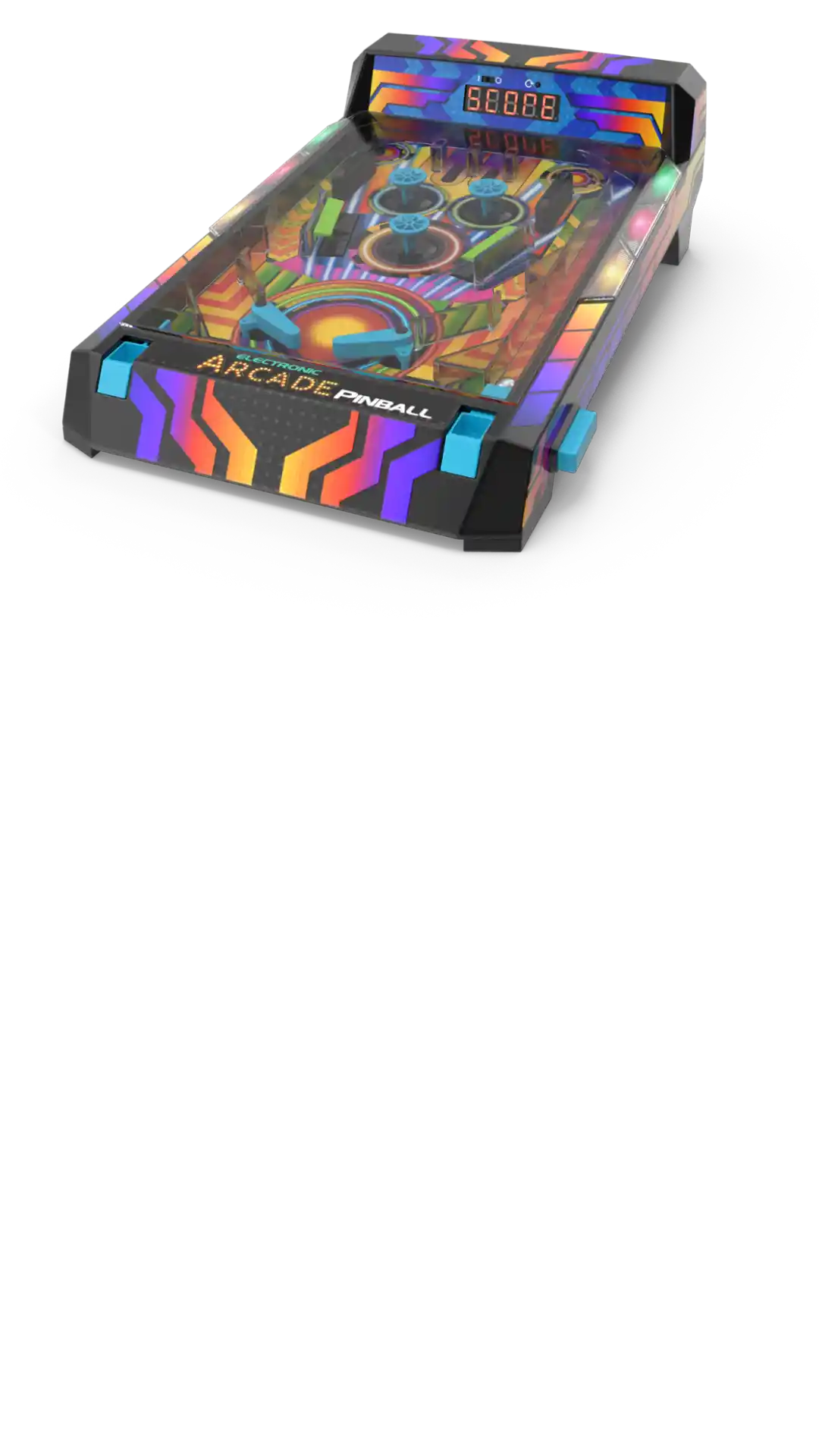
Gamification is actually adding a game-like element to make more fun and engaging something that’s not necessarily a game. It’s all about turning a task that might be boring or difficult into a more enjoyable and motivating activity. You can also earn points, badges, and rewards for completing certain actions or challenges. Are you ready to play?
Dive In
Business Intelligence
Business Intelligence
A smart business means efficiency: Business Intelligence represents the ability to collect up-to-date data, present it in easy-to-understand formats, and deliver it in a timely manner to employees. Making data-driven decision-making and management processes leads to competitive advantage, reduces inefficiencies, and improves productivity and service at all levels.
Dive In
Artificial Scarcity
Artificial Scarcity
We often tend to desire what we cannot have. Or what we are in danger of losing: Artificial Scarcity is a strategy that flaunts a limited number of items that do not correspond to actual availability. The goal is to stimulate the perception in consumers that the stock of items is about to run out and thus create a need based on the “fear of being cut off” or the intention to buy the item in order to resell it at a higher price.
Dive In
Subscription Model
Subscription Model
A subscription model is a business tool that generates revenue by charging customers a fee at regular intervals. The company provides products or services to subscribers on a subscription basis, usually monthly or annually. In this way, loyalty has become more important than acquiring new users.
Dive In
Holacracy & Flat Organization
Holacracy & Flat Organization
A “flat organization” breaks down the traditional hierarchy and removes its negative connotation, while “holacracy” is the business tool that facilitates its formation. Flat organizations place more emphasis on communication and collaboration, aspiring to a distributed decision-making process that gives each employee a voice. But this is a model that is difficult to implement.
Dive In
Mass Customization
Mass Customization
Mass customization is an initiative adopted by companies to embrace the increasingly diversified needs of customers. By offering customizable products and services, consumers feel engaged and can bring their creativity into play. Brands gain from this a boost in perceived value and the opportunity to fuel a positive word-of-mouth marketing.
Dive In
Coopetition
Coopetition
If you can’t beat them, join them. Coopetition is a business strategy that defines cooperative and competitive relationships between competing companies in the same young or high-growth market. The goal is to travel a stretch of road together to lower initial research and development costs. Once the desired results are achieved, the companies will return to being enemies as before.
Dive In
MVP
MVP
To the disappointment of all sports fans, this is not an article about Michael Jordan. In the language of business, MVP stands for Minimum Viable Product and indicates the version of a new product that has enough features to attract customers. In this way, a team can gather the most feedback with the least effort, improve the prototype, and validate its sale.
Dive In
Agile
Agile
Agile is an approach to software development designed to respond to change. Teams quickly analyze the context in which they operate, identify uncertainties faced, and figure out how to adapt to always move forward. Interaction between individuals comes before processes and tools; collaboration with the customer is more important than negotiating contracts.
Dive In
Bounded Rationality
Bounded Rationality
The best solutions always come to mind when it is too late. This is because human beings tend to make decisions on the basis of satisfaction rather than optimization. Bounded Rationality means that we are unable to think clearly and linearly, we proceed by trial and error and forget all the possible variables that affect the process. But we are also flawed.
Dive In