Innovation Alphabet
5G
In a nutshell
5G is the new frontier of cellular telephony. It was designed to improve (or completely replace) previous generations of mobile networks. The 5th generation features lower latency, ensuring flawless performance of business applications and many other digital experiences – thus enabling the new cultural generations to furiously play Fortnite away from home.
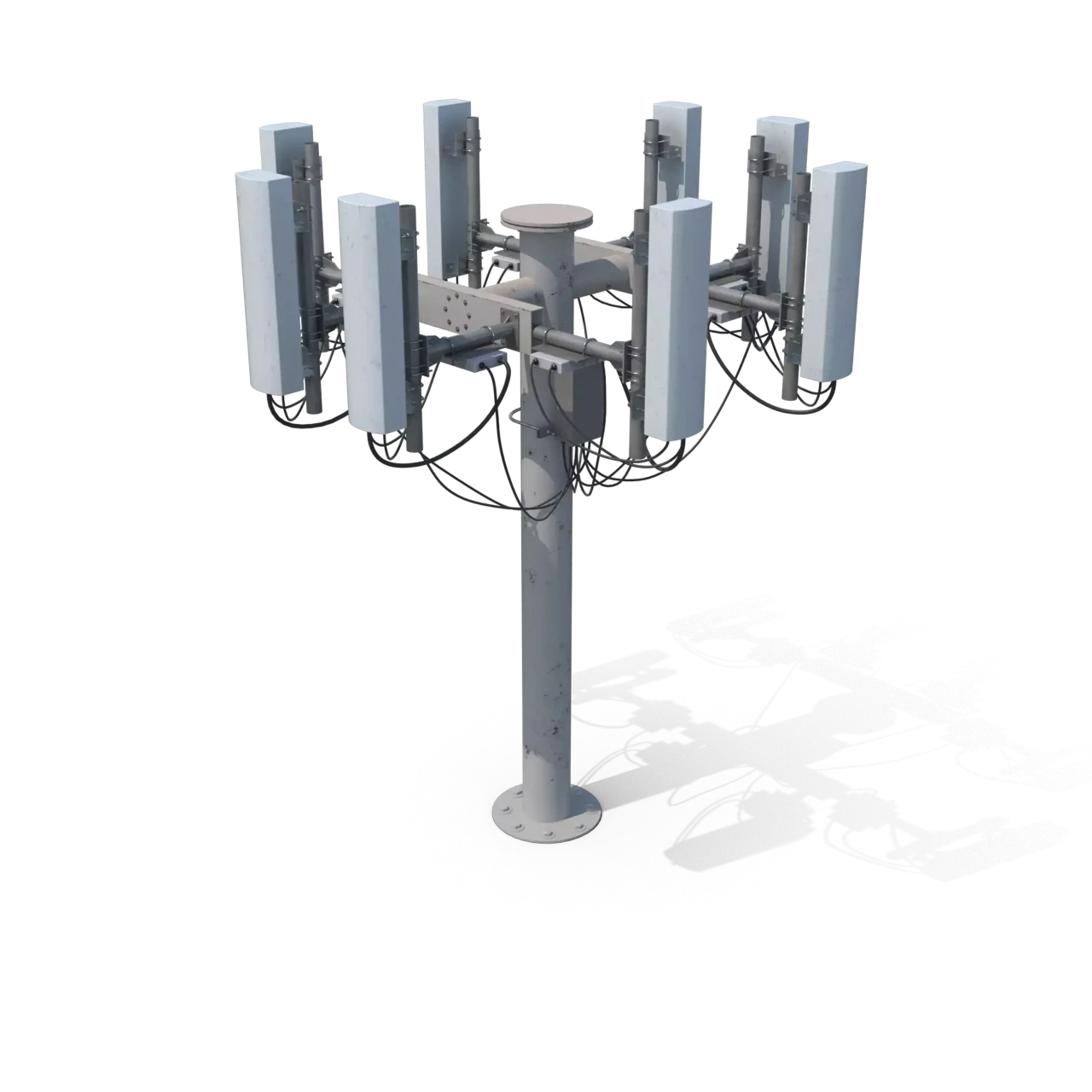
5g networks
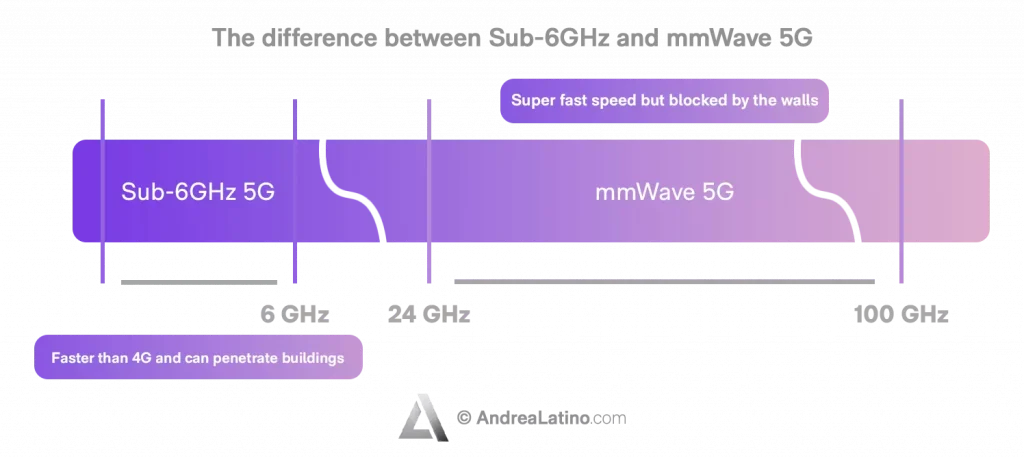
First of all, not all 5G networks are equal. We need to set a difference between the super fast mmWave 5G and the slower but more widespread Sub-6GHz 5G. The former refers to higher frequency radio bands while the latter refers to mid and low-frequency bands under 6GHz.
Yeah, but what does it mean? It means that mmWave 5G networks are ultra-fast, but they’re also ultra-short range. To use mmWave technology, you need to be within about a block of a 5G tower, and that isn’t feasible in suburban and rural areas. Moreover, the spectrum is blocked and obscured by doors, windows, trees, and walls, further limiting its available range.
Instead, Sub-6GHz 5G is faster than 4G, but it doesn’t offer the amazingly fast speeds you can get with mmWave. Also, since it has a longer range and can better penetrate objects, it is much more affordable for carriers to implement.
Application Fields
• Smart factories: Setting up interconnected, efficient, and semi-automated smart factories would be impossible without a strong network architecture. 5G is the key to harness the pervasive connectivity of the Internet of Things, delivering unprecedented levels of productivity. Digitalization, process automation and innovative services are indispensable for the business of smart industries today.
• Smart cities: The fifth generation is thinking big and is not limited to factories. “Smart cities” will be, according to the European Commission, places where “traditional networks and services are made more efficient using digital and telecommunications technologies for the benefit of its inhabitants and businesses”. 5G stands as a solver of problems that were insurmountable for previous networks. For example, poor support for simultaneous connections, high power consumption and too high price per bit.
• Healthcare: The use of 5G in health care enables an efficient networked monitoring of all medical devices. This allows, for example, real-time blood tests in chemotherapy to be analyzed by Artificial Intelligence systems. But the new technology also will enable applications that were totally sci-fi back in the days of Dr. House: telemedicine, remote surgery, home drug delivery. It will be the 4Ps medicine: predictive, preventive, personalized and participatory.
Industries
• 5G in Smart Homes
Smart Bin and Smart Gate are two prototype solutions designed by Polifactory – a research laboratory of the Politecnico di Milano. Together with Vodafone, Exprivia Italtel, Prisma Telecom Testing and with the support of Amazon Web Services, they aimed respectively at sorted waste collection and people flow monitoring. Smart Bin leverages the potential of 5G and Artificial Intelligence to automate and speed up waste sorting; Smart Gate, on the other hand, combines environmental monitoring and people flow detection features by cluster.
• 5G in the Telecommunications Industry – Ericsson Industry Connect
Companies implementing Industry 4.0 must have fast, reliable, and secure wireless connectivity solutions at their disposal. Ericsson, therefore, has devised a fifth-generation technology designed specifically for industrial environments so that enterprises can benefit from a network that allows them to optimize and simplify business operations through the creation, collection, and analysis of data.




Do you have a Strategy & Innovation challenge to tackle? Let’s face it. Together.
C-levels from these companies (AND MORE) relied on my expertise to overcome thEIR CHALLENGES IN THIS AREA. And you can, too.
Can I help you?

Business Functions
• 5G in support of supply chain optimization
Marco Contento is the VP of 5G technologies at Telit – an Internet of Things (IoT) Enabler company headquartered in Irvine, California. And indeed he seems quite happy with the benefits that low-latency 5G connectivity brings to the supply chain. For example, he talks about vehicle-to-vehicle communication. Or, again, “an automotive factory synchronizing parts delivery from outside can see shipment status and integrate that tracking data into its workflow”. In short, 5G helps improve visibility in supply chains and prevents inventory shrink.
• 5G in support of earthquake prevention
The University of L’Aquila, in partnership with ZTE and Wind Tre, has implemented a system to monitor stability and structural safety of buildings through sensors that transmit signals at very high speed through 5G to a data processing center. The monitoring of the situation will be immediate: in the event of a tremor, seismic waves would be detected by the sensors, consequently setting in motion a whole chain of safety interventions. All of this within milliseconds. And that’s a previously unthinkable speed that is crucial to save lives.
• 5G in support of manufacturing
With the 5G-SMART project, Ericsson wants to test the new network technology in real production environments and in its most sophisticated applications such as remote-controlled industrial robotics, wireless process monitoring, and mobile robotics. They conduct tests on-site, bringing the appropriate instrumentation inside factories and machine rooms, and performing Electromagnetic Compatibility assessments, signal measurements and coexistence tests between public and private industrial networks.
Stay in wonderland
Let me show you how deep the rabbit hole goes.
Check out more of the Innovation Alphabet:

Gamification
Gamification
Gamification is actually adding a game-like element to make more fun and engaging something that’s not necessarily a game. It’s all about turning a task that might be boring or difficult into a more enjoyable and motivating activity. You can also earn points, badges, and rewards for completing certain actions or challenges. Are you ready to play?
Dive In
Business Intelligence
Business Intelligence
A smart business means efficiency: Business Intelligence represents the ability to collect up-to-date data, present it in easy-to-understand formats, and deliver it in a timely manner to employees. Making data-driven decision-making and management processes leads to competitive advantage, reduces inefficiencies, and improves productivity and service at all levels.
Dive In
Artificial Scarcity
Artificial Scarcity
We often tend to desire what we cannot have. Or what we are in danger of losing: Artificial Scarcity is a strategy that flaunts a limited number of items that do not correspond to actual availability. The goal is to stimulate the perception in consumers that the stock of items is about to run out and thus create a need based on the “fear of being cut off” or the intention to buy the item in order to resell it at a higher price.
Dive In
Subscription Model
Subscription Model
A subscription model is a business tool that generates revenue by charging customers a fee at regular intervals. The company provides products or services to subscribers on a subscription basis, usually monthly or annually. In this way, loyalty has become more important than acquiring new users.
Dive In
Holacracy & Flat Organization
Holacracy & Flat Organization
A “flat organization” breaks down the traditional hierarchy and removes its negative connotation, while “holacracy” is the business tool that facilitates its formation. Flat organizations place more emphasis on communication and collaboration, aspiring to a distributed decision-making process that gives each employee a voice. But this is a model that is difficult to implement.
Dive In
Mass Customization
Mass Customization
Mass customization is an initiative adopted by companies to embrace the increasingly diversified needs of customers. By offering customizable products and services, consumers feel engaged and can bring their creativity into play. Brands gain from this a boost in perceived value and the opportunity to fuel a positive word-of-mouth marketing.
Dive In
Coopetition
Coopetition
If you can’t beat them, join them. Coopetition is a business strategy that defines cooperative and competitive relationships between competing companies in the same young or high-growth market. The goal is to travel a stretch of road together to lower initial research and development costs. Once the desired results are achieved, the companies will return to being enemies as before.
Dive In
MVP
MVP
To the disappointment of all sports fans, this is not an article about Michael Jordan. In the language of business, MVP stands for Minimum Viable Product and indicates the version of a new product that has enough features to attract customers. In this way, a team can gather the most feedback with the least effort, improve the prototype, and validate its sale.
Dive In
Agile
Agile
Agile is an approach to software development designed to respond to change. Teams quickly analyze the context in which they operate, identify uncertainties faced, and figure out how to adapt to always move forward. Interaction between individuals comes before processes and tools; collaboration with the customer is more important than negotiating contracts.
Dive In
Bounded Rationality
Bounded Rationality
The best solutions always come to mind when it is too late. This is because human beings tend to make decisions on the basis of satisfaction rather than optimization. Bounded Rationality means that we are unable to think clearly and linearly, we proceed by trial and error and forget all the possible variables that affect the process. But we are also flawed.
Dive In