Innovation Alphabet
Cloud Computing
In a nutshell
Cloud Computing is an on-demand technology service provider that is anything but “cloudy”. All you need is an internet connection, and you can access a platform that offers computing, storage and database capabilities based on your needs. Cloud Computing could be private, public or hybrid, but it will always offer faster innovation, flexible resources, and economies of scale.

definitions
• Private Cloud
In the private cloud, Cloud Computing resources are used exclusively by a single organization or company, which manages the available space as it sees fit. The private cloud may reside in the enterprise data center, under the control of internal staff, or it may be outsourced to a specialized external provider.
• Public Cloud
The infrastructure is owned by the service provider. It delivers services available to the public via the Internet on resources shared by multiple users. The provider supports infrastructure investments. The customer pays on a pay-as-you-go basis only for the services they actually use.
• Hybrid Cloud
Hybrid Cloud, as you can imagine, is a middle ground between the clouds listed above. Such an environment allows the enterprise to move data and applications between public and private clouds, thus offering greater flexibility and more deployment options.

Application Fields
• Infrastructure-as-a-Service (IaaS): The cloud provider leases an infrastructure complete with all the necessary resources. The customer can freely access and manage it independently, paying according to consumption.
• Structure-as-a-Service (SaaS): It is a model for the distribution of software accessible to the user via the Internet. The provider hosts and manages applications and takes care of maintenance activities.
• Platform-as-a-Service (PaaS): The provider offers the company an “all-inclusive” platform where it can develop its applications quickly and easily, without having to worry about the technical implications related to the underlying infrastructure. This is the most efficient solution, since it does not require engaging in any kind of onerous activity related to application execution.
Industries
• Cloud Computing for Amazon Web Services (AWS)
Among the many services Amazon delivers is Cloud. Amazon’s platform offers more than 175 Cloud Computing services. It goes from compute, storage, and database infrastructure to new technologies such as machine learning, artificial intelligence, data lake, analytics and IoT. AWS supports 90 security standards and compliance certificates. All 117 AWS services that store customer data offer the ability to encrypt that data.
• Cloud Computing for Microsoft Azure
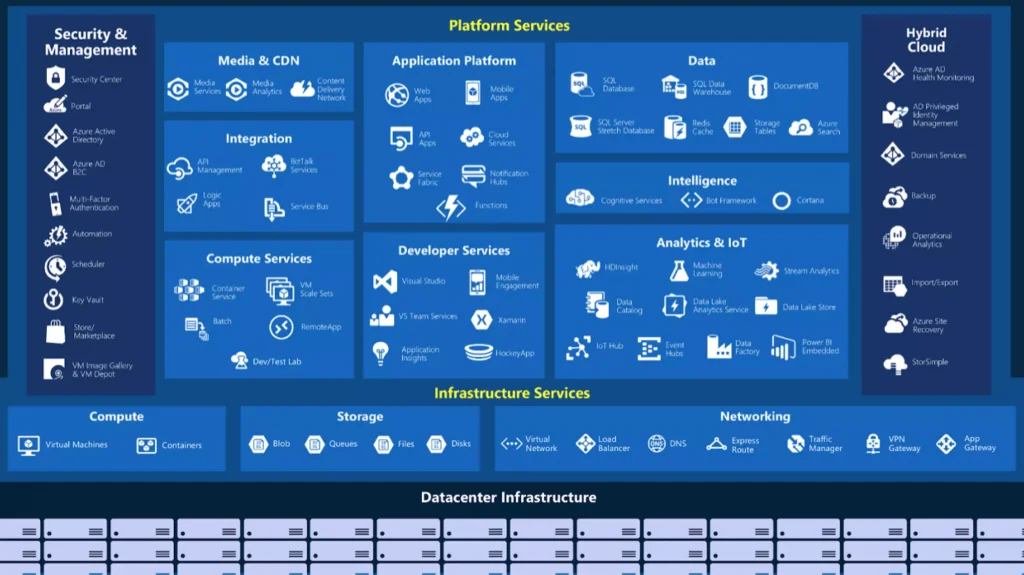
This is a public Cloud Computing platform. It provides a range of cloud services, including computing, analytics, storage, and networking. Users can choose from more than 200 cloud products and services designed to develop new solutions or run existing applications in the public cloud. The platform offers tools that support all industries, including finance and e-commerce. It is also compatible with open-source technologies. Ninety-five percent of Fortune 500 companies (the 500 largest U.S. corporate enterprises measured by their revenue) entrust their business to Azure.
• Cloud Computing for iCloud
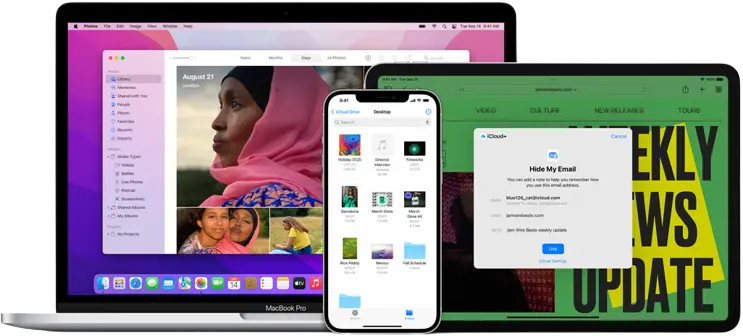
It is the service offered by Apple that allows content to be automatically stored and disseminated to all available iOS products. It allows automatic synchronization of data, contacts, passwords, pictures, and music tracks among the user’s various devices. In this way, when a change is made on one of the devices, all others are updated instantaneously.


Do you have a Strategy & Innovation challenge to tackle? Let’s face it. Together.
C-levels from these companies (AND MORE) relied on my expertise to overcome thEIR CHALLENGES IN THIS AREA. And you can, too.
Can I help you?
Business Functions
• Cloud Computing in support of maintenance
By embracing Big Data, Analytics and Cloud Computing in collaboration with SAP (a German software company), NOVA Chemicals has improved its maintenance planning processes. Through the cloud-based software, stakeholders have a daily and/or weekly view of scheduled work, priorities, and resources needed. This makes it easier to execute work and control material availability. The change introduced has reduced the number of plant outages and increased time spent on proactive and preventive maintenance by 61 percent.
• Cloud Computing in support of customer experience
IBM addressed American Airlines’ immediate and long-term operational concerns through a migration from on-premises software to IBM Cloud Infrastructure-as-a-Service with the VMware Cloud Foundation solution.
• Cloud Computing in support of time-to-market
To make operations more efficient, foster greater innovation, and launch new features and products to market faster, UBank wanted to implement a PaaS solution. As a result, the company adopted an IBM Cloud platform on which to propose new initiatives. There’s also a virtual assistant that incorporates IBM Watson technology to support the bank’s online mortgage application.
Stay in wonderland
Let me show you how deep the rabbit hole goes.
Check out more of the Innovation Alphabet:

Gamification
Gamification
Gamification is actually adding a game-like element to make more fun and engaging something that’s not necessarily a game. It’s all about turning a task that might be boring or difficult into a more enjoyable and motivating activity. You can also earn points, badges, and rewards for completing certain actions or challenges. Are you ready to play?
Dive In
Business Intelligence
Business Intelligence
A smart business means efficiency: Business Intelligence represents the ability to collect up-to-date data, present it in easy-to-understand formats, and deliver it in a timely manner to employees. Making data-driven decision-making and management processes leads to competitive advantage, reduces inefficiencies, and improves productivity and service at all levels.
Dive In
Artificial Scarcity
Artificial Scarcity
We often tend to desire what we cannot have. Or what we are in danger of losing: Artificial Scarcity is a strategy that flaunts a limited number of items that do not correspond to actual availability. The goal is to stimulate the perception in consumers that the stock of items is about to run out and thus create a need based on the “fear of being cut off” or the intention to buy the item in order to resell it at a higher price.
Dive In
Subscription Model
Subscription Model
A subscription model is a business tool that generates revenue by charging customers a fee at regular intervals. The company provides products or services to subscribers on a subscription basis, usually monthly or annually. In this way, loyalty has become more important than acquiring new users.
Dive In
Holacracy & Flat Organization
Holacracy & Flat Organization
A “flat organization” breaks down the traditional hierarchy and removes its negative connotation, while “holacracy” is the business tool that facilitates its formation. Flat organizations place more emphasis on communication and collaboration, aspiring to a distributed decision-making process that gives each employee a voice. But this is a model that is difficult to implement.
Dive In
Mass Customization
Mass Customization
Mass customization is an initiative adopted by companies to embrace the increasingly diversified needs of customers. By offering customizable products and services, consumers feel engaged and can bring their creativity into play. Brands gain from this a boost in perceived value and the opportunity to fuel a positive word-of-mouth marketing.
Dive In
Coopetition
Coopetition
If you can’t beat them, join them. Coopetition is a business strategy that defines cooperative and competitive relationships between competing companies in the same young or high-growth market. The goal is to travel a stretch of road together to lower initial research and development costs. Once the desired results are achieved, the companies will return to being enemies as before.
Dive In
MVP
MVP
To the disappointment of all sports fans, this is not an article about Michael Jordan. In the language of business, MVP stands for Minimum Viable Product and indicates the version of a new product that has enough features to attract customers. In this way, a team can gather the most feedback with the least effort, improve the prototype, and validate its sale.
Dive In
Agile
Agile
Agile is an approach to software development designed to respond to change. Teams quickly analyze the context in which they operate, identify uncertainties faced, and figure out how to adapt to always move forward. Interaction between individuals comes before processes and tools; collaboration with the customer is more important than negotiating contracts.
Dive In
Bounded Rationality
Bounded Rationality
The best solutions always come to mind when it is too late. This is because human beings tend to make decisions on the basis of satisfaction rather than optimization. Bounded Rationality means that we are unable to think clearly and linearly, we proceed by trial and error and forget all the possible variables that affect the process. But we are also flawed.
Dive In