Edge Computing
Innovation Alphabet
Edge Computing
In a nutshell
Location, location, location. This phrase not only applies to real estate, but also to an emerging world: edge computing. This is an IT architecture that enables real-time processing, analysis and storage of data performed as close as possible to its source of origin. A strategy that was created to come to the rescue of traditional data centers, challenged by the growing number of internet-connected devices and the volume of data used and produced by companies.

Application Fields
• IoT: This computational model is employed in the Internet of Things. It provides the ability to process large amounts of locally produced data and sends much more compact processing to remote systems.
• 5G: Network architectures such as 5G can also leverage edge computing. It allows shortening the distance data travels to get to the network cloud server and back to the user. It is the special ingredient for an agile and intelligent mobile network.
• Transportation: The speed of transmission is especially crucial for smart cars and self-driving vehicles in general. In fact, they need to rely on control systems that can interpret the information transmitted by sensors in real time. This allows to identify obstacles, signs, and better navigation routes.



Do you have a Operations & Human Resources challenge to tackle? Let’s face it. Together.
C-levels from these companies (AND MORE) relied on my expertise to overcome thEIR CHALLENGES IN THIS AREA. And You can, too.
Can I help you?
Industries
• Edge computing in the automotive industry: 5G CARMEN
The European Commission has funded a project called “5G for Connected and Automated Road Mobility in the European Union”. It aims to study, implement, and demonstrate innovative solutions for cooperative, connected and automated mobility (CCAM). The intention is to build a 5G-enabled road corridor from Bologna to Munich to conduct some cross-border testing of the mobile network on four use cases: cooperative maneuvering, situational awareness, video streaming and green driving. 5G NR (New Radio) will be used to support services that require bandwidth and low latency times. The idea driving the project is to define a “distributed mobile cloud” that extends from the vehicle itself to the centralized cloud. It will provide an ending multi-tenant and neutral host platform that can enable new business models.


• Edge computing in the telecommunications industry
The computational model is, of course, a viable solution for telecom companies. Indeed, they use distributed architectures to build next-generation mobile networks (5G itself).
• Edge computing in broadcasting services
Companies operating in broadcasting, on-demand and real-time (similar to the Netflix model), can benefit enormously from edge computing. By creating small, interconnected regional data centers that are close to users, their requests can be met very quickly, and latency issues can be reduced to zero. Video content can thus be distributed quickly to anyone who requests it by duplicating it on different edge servers and routing it to the user from the machine closest to them.
Business Functions
• Edge computing in support of logistics
The goals of Verizon – a U.S. broadband and telecommunications provider – were to automate deliveries and delivery forecasting, improve quality control and resource efficiency, and create end-to-end transparency and visibility throughout the supply chain. Verizon’s 5G Ultra-Wideband and Multi-Access Edge Computing (MEC) solution powers Artificial Intelligence and Augmented Reality technologies that help refine supply chain efficiency. The system provides real-time logistics checks, thus helping manufacturers track goods, identify defective items, and automatically replace damaged or delayed products.
• Edge computing in support of facial recognition walkthrough
NEC has some of the most developed facial recognition technologies in the world. The company is planning to adopt systems such as edge computing for its facial recognition cloud service in order to use it on a wide range of applications according to customer needs.

• Edge computing in support of HR
A study presented an optimization model for Human Resource Management (HRM) using Whale Optimization Algorithm (WOA) in cloud-edge computing. Experimental results show that the prototype was able to improve the minimum response time, allocation cost, and increase the number of allocated human resources in two different scenarios compared with other meta-heuristic algorithms.
Stay in wonderland
Let me show you how deep the rabbit hole goes.
Check out more of the Innovation Alphabet:

Gamification
Gamification
Gamification is actually adding a game-like element to make more fun and engaging something that’s not necessarily a game. It’s all about turning a task that might be boring or difficult into a more enjoyable and motivating activity. You can also earn points, badges, and rewards for completing certain actions or challenges. Are you ready to play?
Dive In
Business Intelligence
Business Intelligence
A smart business means efficiency: Business Intelligence represents the ability to collect up-to-date data, present it in easy-to-understand formats, and deliver it in a timely manner to employees. Making data-driven decision-making and management processes leads to competitive advantage, reduces inefficiencies, and improves productivity and service at all levels.
Dive In
Artificial Scarcity
Artificial Scarcity
We often tend to desire what we cannot have. Or what we are in danger of losing: Artificial Scarcity is a strategy that flaunts a limited number of items that do not correspond to actual availability. The goal is to stimulate the perception in consumers that the stock of items is about to run out and thus create a need based on the “fear of being cut off” or the intention to buy the item in order to resell it at a higher price.
Dive In
Subscription Model
Subscription Model
A subscription model is a business tool that generates revenue by charging customers a fee at regular intervals. The company provides products or services to subscribers on a subscription basis, usually monthly or annually. In this way, loyalty has become more important than acquiring new users.
Dive In
Holacracy & Flat Organization
Holacracy & Flat Organization
A “flat organization” breaks down the traditional hierarchy and removes its negative connotation, while “holacracy” is the business tool that facilitates its formation. Flat organizations place more emphasis on communication and collaboration, aspiring to a distributed decision-making process that gives each employee a voice. But this is a model that is difficult to implement.
Dive In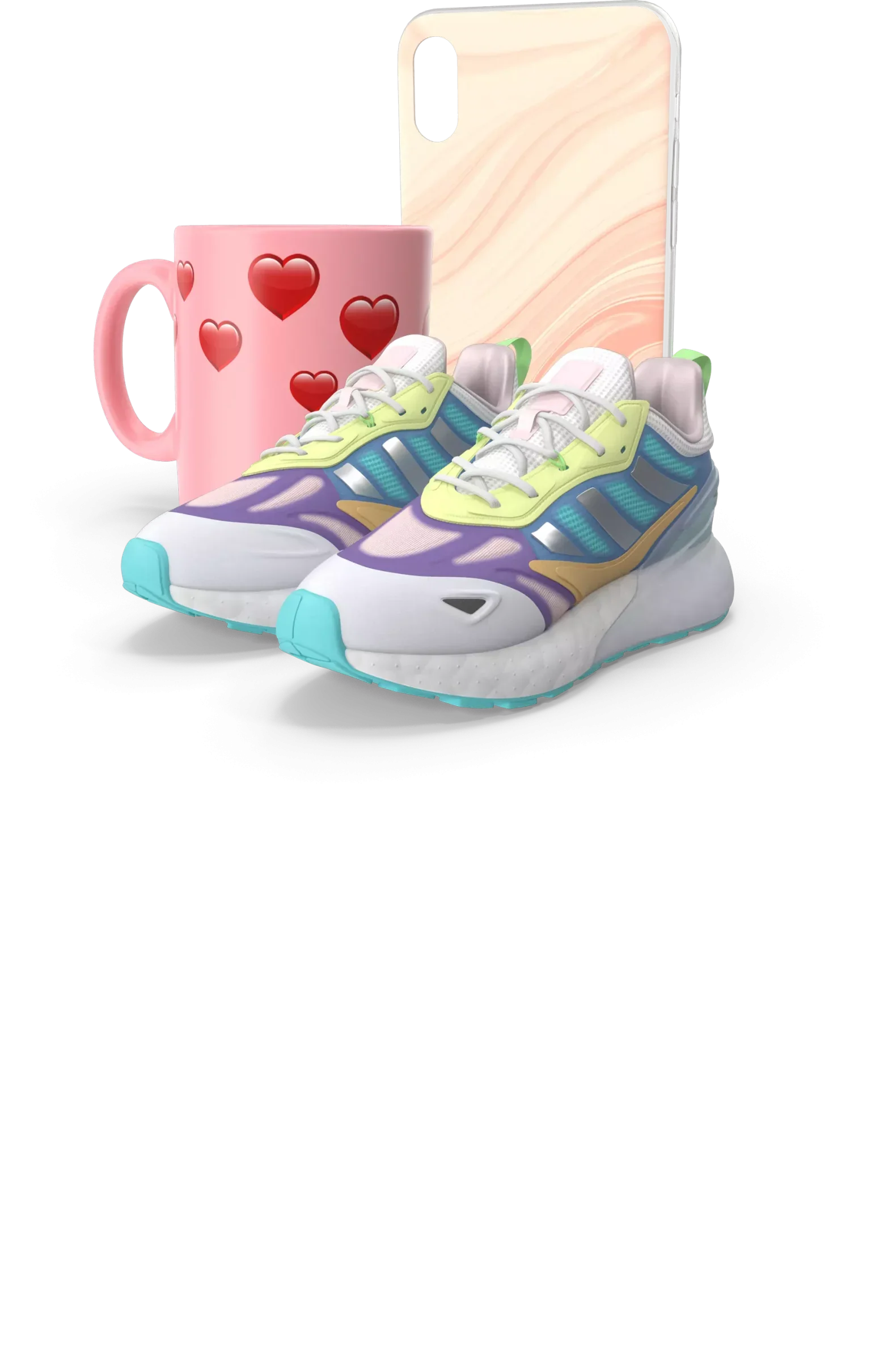
Mass Customization
Mass Customization
Mass customization is an initiative adopted by companies to embrace the increasingly diversified needs of customers. By offering customizable products and services, consumers feel engaged and can bring their creativity into play. Brands gain from this a boost in perceived value and the opportunity to fuel a positive word-of-mouth marketing.
Dive In
Coopetition
Coopetition
If you can’t beat them, join them. Coopetition is a business strategy that defines cooperative and competitive relationships between competing companies in the same young or high-growth market. The goal is to travel a stretch of road together to lower initial research and development costs. Once the desired results are achieved, the companies will return to being enemies as before.
Dive In
MVP
MVP
To the disappointment of all sports fans, this is not an article about Michael Jordan. In the language of business, MVP stands for Minimum Viable Product and indicates the version of a new product that has enough features to attract customers. In this way, a team can gather the most feedback with the least effort, improve the prototype, and validate its sale.
Dive In
Agile
Agile
Agile is an approach to software development designed to respond to change. Teams quickly analyze the context in which they operate, identify uncertainties faced, and figure out how to adapt to always move forward. Interaction between individuals comes before processes and tools; collaboration with the customer is more important than negotiating contracts.
Dive In
Bounded Rationality
Bounded Rationality
The best solutions always come to mind when it is too late. This is because human beings tend to make decisions on the basis of satisfaction rather than optimization. Bounded Rationality means that we are unable to think clearly and linearly, we proceed by trial and error and forget all the possible variables that affect the process. But we are also flawed.
Dive In